
In this article
- How the System Works
- Why the System Is Needed + Risks of Neglect
- The Maintenance Regime — What, How Often, and How
- Who Is Authorized to Maintain and Certify
- Standards and Regulation
- Required Documentation and Forms
- Common Faults and Warning Signs
- The Value of Professional Maintenance Management / How Domera Helps
- Frequently Asked Questions
- Further Reading
- Frequently asked questions
Work-at-Height Equipment — Inspection, Maintenance and Safety in the Building
Work-at-height equipment is the set of personal equipment — body harnesses, energy-absorbing connectors, carabiners, fall arresters and portable ladders — that a worker wears or uses in order to work safely above height, and the component that catches them if they slip or fall. This is equipment designed to bear human life at the moment of a fall, and therefore in Israel it must undergo a periodic inspection once a year by an authorized party (internal or a service provider), with a documented inspection certificate — a legal requirement and not a recommendation. The article explains how the equipment works, why its maintenance is critical, what the inspection regime is, and who is authorized to inspect and certify.
For a building manager or maintenance officer, work-at-height equipment is the "living insurance" of everyone who goes up to the roof — for window cleaning, servicing the air conditioning, envelope inspection or accessing technical rooms. A harness that has aged, a cracked connector or a ladder with a broken rung are not always visible to the eye, but at the moment of truth they are the difference between a fall that is arrested and a disaster. This is precisely why the annual inspection and the documentation are not formalities — they are what ensures the equipment holds when needed.
Part of a bigger picture: work-at-height equipment is one component within a complete preventive-maintenance program for the building — all the systems, frequencies, licensed parties and certificates in one place. For the full framework see the complete PPM guide.
How the System Works
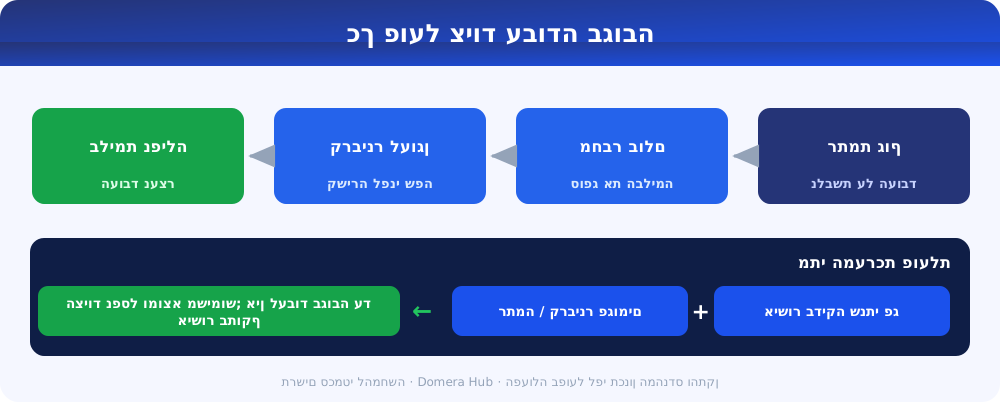
Work-at-height equipment is not an "accessory" but a personal fall-arrest system, whose main components are:
- Body harness (Harness) — the harness worn on the worker's body, distributing the arresting force over the pelvis, shoulders and thighs at the moment of a fall. It is the worker's point of connection to the rest of the chain.
- Connector / energy absorber (Lanyard) — a rope or strap with a component that absorbs and decelerates the arresting force, so that the stop does not injure the body. There are fixed connectors and retractable connectors (retractable-type fall arresters).
- Carabiner / hook (Connector) — the component connecting the connector to the anchor point or lifeline; it locks automatically and prevents accidental disconnection.
- Portable ladders (movable) — portable work ladders used for access to low-to-medium height; work-at-height equipment in its own right, with its own inspection regime.
Operational flow: the worker puts on a harness, visually examines the equipment, and ties the carabiner to a sound anchor point or lifeline before approaching the edge. In ongoing work they remain tied throughout the entire time they are at risk of a fall. If they slip, the force of the fall transfers from the body through the harness, to the energy-absorbing connector, to the carabiner, and from there to the fixed anchor. Every link in the chain must be sound — a carabiner that does not lock, a strap that has frayed or an energy absorber that has come apart are the link that will break under this force. It is important to distinguish: work-at-height equipment is the worker's personal equipment, and it ties into the lifelines and anchor points fixed on the roof — two complementary systems, inspected on separate tracks.
Why the System Is Needed + Risks of Neglect
A fall from height is one of the leading causes of fatal workplace accidents in the construction and maintenance sector. Every task at height — facade cleaning, servicing the air conditioning on the roof, envelope inspection, gutter cleaning or accessing technical rooms — involves a fall risk, and work-at-height equipment is the last and essential line that prevents a fall from ending in disaster. Without sound, inspected equipment, there is no legal and safe way to perform a significant part of maintenance work at height.
Neglecting the equipment is especially dangerous because the wear in it is hidden: a harness looks intact from the outside but its stitching has weakened from sun radiation, a strap has worn at the edges, an energy absorber has partially come apart, or a carabiner whose locking spring has fatigued — all of these are discovered in a professional inspection, and often discovered too late, at the moment of the fall itself. Beyond the direct risk to life:
- Legal and criminal liability — placing a worker to work at height without sound, inspected equipment is a serious breach of the safety duties of the building occupier and the work supervisor; in an accident, the occupier's exposure is especially great.
- Cancellation of insurance coverage — a fall incident in which the equipment did not pass the periodic inspection may void coverage and leave the occupier personally exposed.
- Halting work at height — without inspected equipment and a valid certificate, responsible contractors and maintenance teams will not go up to the roof — which paralyzes window cleaning, air-conditioning servicing and envelope maintenance.
The Maintenance Regime — What, How Often, and How
According to the mandatory maintenance matrix, work-at-height equipment requires an annual inspection by the authorized party (internal or a service provider), producing an internal or external inspection certificate. This is a legal requirement that applies at every site where work at height is performed.
Alongside the annual inspection of the personal equipment, portable ladders (movable) require a semi-annual internal inspection, performed internally and documented in a portable-ladders inspection form — this is a recommended inspection (not statutory) that complements the annual inspection regime. This distinction is important: not every item of work-at-height equipment is inspected at the same frequency.
Beyond the periodic inspections, a visual inspection before every use is required: every worker must examine the harness, the connector, the carabiner and the ladder before using them. This inspection does not replace the annual inspection — it is an additional layer of protection intended to catch new damage (a cut in a strap, a jammed carabiner, a cracked rung) between the periodic inspections. In general, and in accordance with the current manufacturer and standard guidance, every item of equipment is marked, inspected according to defined disqualification criteria, and equipment that is disqualified is removed from use immediately. Frequencies and measures that do not appear in the matrix are set according to the manufacturer's guidance and the standard; do not assume a number that is not documented.
Who Is Authorized to Maintain and Certify
The annual inspection and the inspection certificate are issued by an authorized internal party or an external service provider — holding the training to examine fall-arrest equipment according to the manufacturer and standard criteria, and to set a soundness or disqualification verdict for each item. The semi-annual inspection of the portable ladders is performed internally and documented in the dedicated form.
It is important to be precise about the fields of responsibility: the personal equipment (harnesses, connectors, carabiners, portable ladders) is inspected as work-at-height equipment, whereas the fixed system to which it ties — lifelines and anchor points — is inspected separately by a licensed inspector or engineer. Do not assume that inspecting the harnesses covers the anchors as well, or vice versa. The visual inspection before use is the responsibility of the worker themselves, but the official fitness verdict of the equipment belongs to the authorized party that issues the inspection certificate.
Standards and Regulation
Inspection of work-at-height equipment is a legal (statutory) requirement. The regulatory basis for work-at-height safety in Israel is the Safety at Work Ordinance and its regulations — in particular the Work at Height Regulations — under which sound fall-arrest equipment, training of the workers for work at height, and the periodic inspection of the equipment and its documentation are required.
The system belongs to the family of safety equipment and engineer's inspections in the building. Regarding a specific Israeli Standard number — there is no standard number or dedicated fire form in our requirements matrix directed at this system, and therefore we do not cite an SI number here; the design requirements, disqualification criteria and inspection intervals are set according to the current standard and manufacturer/authority guidance and at the discretion of the authorized party. The inspection certificate is the binding document.
Required Documentation and Forms
The document that upholds the equipment's compliance is the inspection certificate (internal or external), issued once a year. Keep it as a live file with a clear expiration date: this is the documentation that shows, before a regulator or an investigator after an incident, which items of equipment exist, that they were all inspected, and which items were disqualified and removed from use. Alongside this, the semi-annual inspection of the portable ladders is documented in a portable-ladders inspection form.
It is recommended to additionally keep the log of visual inspections before use, the workers' work-at-height training certifications, and the equipment inventory record with the purchase and disqualification dates. Work-at-height equipment has no dedicated fire form — the inspection certificate is the core of the documentation required for legal compliance.
Common Faults and Warning Signs
- A harness that has aged or been damaged — loosened stitching, straps that have come apart or faded from sun radiation, cuts or localized burning. A harness exposed for years to sun and weather loses strength without a clear external sign.
- A damaged connector / energy absorber — an energy absorber that has partially come apart (a sign that it absorbed a previous fall and is no longer fit), a torn strap, or stitching that has opened.
- A carabiner that does not lock — a fatigued locking spring, a gate that does not close all the way, corrosion or deformation. A carabiner that does not lock may open on its own under load.
- A damaged portable ladder — a cracked or loose rung, a worn or missing foot, damaged locking, or using a ladder unsuited to the height or surface.
- Improper use — tying to a point that is not a standard anchor, a connector too long that does not arrest the fall in time, working without connection, or using equipment that was disqualified and not removed from inventory.
- An expired certificate — working at height when the annual inspection certificate has expired and was not renewed. This is the most serious documentation failure.
The Value of Professional Maintenance Management / How Domera Helps
Work-at-height equipment illustrates why maintenance scheduling is not a bureaucratic matter but a matter of human life: an inspection certificate that has expired and was not renewed in time means it is prohibited to work at height — and in practice, that someone may go up to the roof and tie into a harness that no one has inspected for over a year. Domera's Knowledge Hub is designed to help the maintenance manager see exactly when each certificate expires, before it becomes a problem.
In practice, in Domera the inspection of the work-at-height equipment is managed through a preventive-maintenance program (PPM): the annual inspection has one instance open at any given moment, and closing it requires attaching the inspection certificate. The system sends a reminder before the certificate expires, manages the semi-annual inspection of the portable ladders separately, and produces compliance reports that show exactly which safety items are valid and which are overdue. The idea is simple: close the loop against the certifying document, so that no one goes up to height and relies on equipment whose certificate has lapsed inadvertently.
Frequently Asked Questions
What is work-at-height equipment?
Work-at-height equipment is the personal fall-arrest equipment — a body harness, an energy-absorbing connector, a carabiner and portable ladders — that a worker wears or uses in order to work safely at height, and the component that catches them if they fall. It ties into the fixed anchors on the roof and constitutes the worker's personal protection.
How often must work-at-height equipment be inspected?
Once a year by an authorized internal party or a service provider, with an internal or external inspection certificate — this is a legal requirement. Portable ladders are additionally inspected in a semi-annual internal inspection (recommended), and each item requires a visual inspection before every use.
Who is authorized to inspect and certify the equipment?
An authorized internal party or an external service provider, holding the training to examine fall-arrest equipment according to the manufacturer and standard criteria and to issue an inspection certificate. The semi-annual inspection of the portable ladders is performed internally and documented in a portable-ladders inspection form.
What is the difference between the annual inspection and the visual inspection before use?
The annual inspection is a full periodic inspection of every item, which certifies the equipment's soundness and documents it. The visual inspection before use is a quick examination that every worker does themselves before using the equipment — it catches new damage between inspections but does not replace the annual inspection certificate.
Is it permitted to work at height with un-inspected equipment?
No. Placing a worker to work at height without sound, inspected equipment is a serious breach of workplace safety duties, endangers human life, and may void insurance coverage and lead to criminal liability of the occupier and the work supervisor.
What is the difference between work-at-height equipment and lifelines and anchor points?
Work-at-height equipment is the personal consumable equipment — harnesses, connectors, carabiners and ladders — and is inspected annually. The lifelines and anchor points are the fixed system anchored to the roof, and are inspected separately by a licensed inspector or engineer. Both must be sound in order to work safely — one does not cover the other.
How often are portable ladders inspected?
Portable ladders (movable) are inspected in a semi-annual internal inspection, documented in a portable-ladders inspection form. This is a recommended inspection that complements the annual inspection of the rest of the work-at-height equipment, and alongside it a visual inspection before every use is required.
Is there a fire form or a dedicated Israeli Standard for work-at-height equipment?
Not in our requirements matrix — there is no fire form and no dedicated SI number directed at work-at-height equipment. The binding document is the annual inspection certificate (and a portable-ladders inspection form for the ladders); the inspection requirements are set according to the current standard and manufacturer/authority guidance and under the Safety at Work Ordinance.
Further Reading
- The complete PPM guide — how to build a complete preventive-maintenance program for a building, including safety equipment and engineer's inspections.
- Lifelines and anchor points — the fixed system anchored to the roof into which the work-at-height equipment ties; inspected on a separate track by an engineer.
- Roof davit crane and lifting cradle (BMU) — the lifting machine that lowers workers in a cradle along the facade; a lifting system complementary to work at height.
- The building occupier's safety duties — the legal framework for work-at-height safety and equipment inspections.
- Knowledge Hub — all the guides on building systems in one place.
Frequently asked questions
What is work-at-height equipment?
Work-at-height equipment is the personal fall-arrest equipment — a body harness, an energy-absorbing connector, a carabiner and portable ladders — that a worker wears or uses in order to work safely at height, and the component that catches them if they fall. It ties into the fixed anchors on the roof and constitutes the worker's personal protection.
How often must work-at-height equipment be inspected?
Once a year by an authorized internal party or a service provider, with an internal or external inspection certificate — this is a legal requirement. Portable ladders are additionally inspected in a semi-annual internal inspection (recommended), and each item requires a visual inspection before every use.
Who is authorized to inspect and certify the equipment?
An authorized internal party or an external service provider, holding the training to examine fall-arrest equipment according to the manufacturer and standard criteria and to issue an inspection certificate. The semi-annual inspection of the portable ladders is performed internally and documented in a portable-ladders inspection form.
What is the difference between the annual inspection and the visual inspection before use?
The annual inspection is a full periodic inspection of every item, which certifies the equipment's soundness and documents it. The visual inspection before use is a quick examination that every worker does themselves before using the equipment — it catches new damage between inspections but does not replace the annual inspection certificate.
Is it permitted to work at height with un-inspected equipment?
No. Placing a worker to work at height without sound, inspected equipment is a serious breach of workplace safety duties, endangers human life, and may void insurance coverage and lead to criminal liability of the occupier and the work supervisor.
What is the difference between work-at-height equipment and lifelines and anchor points?
Work-at-height equipment is the personal consumable equipment — harnesses, connectors, carabiners and ladders — and is inspected annually. The lifelines and anchor points are the fixed system anchored to the roof, and are inspected separately by a licensed inspector or engineer. Both must be sound in order to work safely — one does not cover the other.
How often are portable ladders inspected?
Portable ladders (movable) are inspected in a semi-annual internal inspection, documented in a portable-ladders inspection form. This is a recommended inspection that complements the annual inspection of the rest of the work-at-height equipment, and alongside it a visual inspection before every use is required.
Is there a fire form or a dedicated Israeli Standard for work-at-height equipment?
Not in our requirements matrix — there is no fire form and no dedicated SI number directed at work-at-height equipment. The binding document is the annual inspection certificate (and a portable-ladders inspection form for the ladders); the inspection requirements are set according to the current standard and manufacturer/authority guidance and under the Safety at Work Ordinance.