In this article
- How the system works
- Why the system is necessary + risks of neglect
- The maintenance regime — what, how often, and how
- Who is qualified to maintain and certify
- Standards and regulation
- Required documentation and forms
- Common faults and warning signs
- The value of professional maintenance management / how Domera helps
- Frequently asked questions
- Further reading
- Frequently asked questions
A gas or aerosol suppression system in electrical panels is a miniature automatic suppression system installed inside an electrical panel or in an electrical room, extinguishing a fire at its ignition stage using a suppression agent that does not conduct electricity — instead of water, which must not be sprayed on live voltage. Its importance lies in the fact that an electrical panel is one of the most common fire ignition points in a building, and fast, local suppression prevents the spread of the fire, the destruction of expensive equipment and a prolonged shutdown of the building.
Want to understand how a panel suppression system fits into an orderly preventive maintenance program for the building? Read the complete PPM guide — the process, the matrix and the inspection frequencies for every system.
How the system works
The system is built of three main parts: a local detection means inside the panel, a container or unit of suppression agent, and a release mechanism. Detection is usually done by means of a dedicated heat or smoke detector or by a pressurized detection tube laid above the hottest components. When a fire develops and the temperature rises above a defined threshold, the detection point identifies the event and triggers the release of the suppression agent into the enclosed volume of the panel.
Two main families of solutions exist. The first is clean agent — fire-extinguishing gases such as FM-200 or Novec 1230 stored in a pressure container and flooded into the panel, diluting the oxygen or interrupting the combustion chain and evaporating without leaving residue. The second is aerosol — a compact solid unit that, upon activation, generates a fine cloud of particles that chemically suppresses the combustion; it does not require a pressure container or piping and is therefore common in small and medium panels. In both cases the suppression agent does not conduct electricity and does not harm the electronic equipment — a decisive advantage over water, foam or powder in a live-voltage environment.
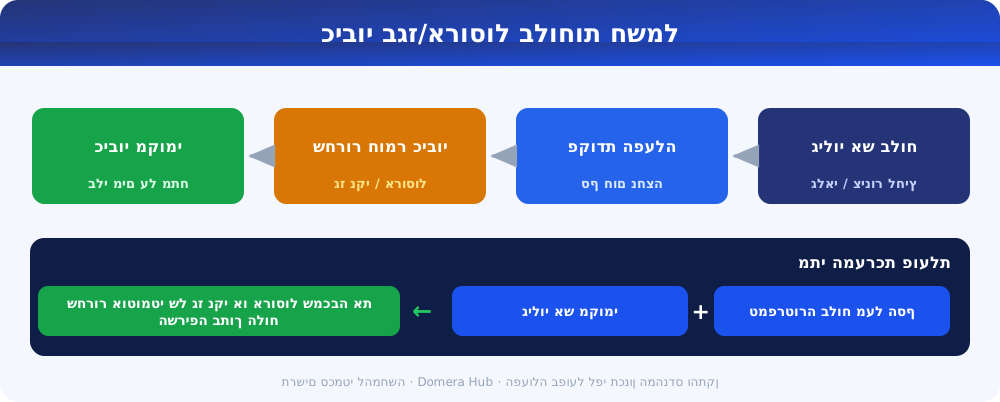
The system operates independently and locally: it is limited to the volume of the panel or electrical room and does not depend on manual activation. In many installations it also transmits an alert to the building's central fire and smoke detection system, so that the maintenance team receives an immediate report of the activation even if no one is present at the location.
Why the system is necessary + risks of neglect
Electrical panels accumulate heat, dust and connections that loosen over time — a combination that makes them a frequent fire source. A fire that begins inside a closed panel can spread quickly to the electrical room and from there to the rest of the building, and is often discovered too late. Local automatic suppression cuts off the event in the first second, before the fire breaks out of the panel.
Neglecting the system creates a double risk. On one hand, a gas container that has lost pressure, an aerosol unit that has expired or a detector that has malfunctioned simply will not operate at the moment of truth — meaning there is protection on paper only. On the other hand, a maintenance failure may cause a false activation that shuts down an entire panel without cause. Beyond the safety risk, this is a legal requirement: the system inspection is documented in a dedicated fire-service form, and without a valid, proper certificate the building is exposed to a deficiency in fire inspection, to impaired insurance coverage in the event of damage, and to personal exposure of the building manager and property owners.
The maintenance regime — what, how often, and how
Per the preventive maintenance matrix, the inspection of the "gas / aerosol suppression in electrical panels" system is performed at a semi-annual (once every six months) frequency, and it applies to every site. The inspection usually includes verifying the integrity and pressure of the gas container or the validity of the aerosol unit, checking the soundness of the detection and activation components, the panel's tightness to preserve the concentration of the suppression agent, and a visual examination of the condition of the components and wiring. At its conclusion, a soundness certificate is issued documenting the findings.
It is important to remember that the system inside the panel complements the maintenance of the panel itself: electrical systems maintenance — tightening connections, cleaning off dust and a thermographic scan to locate hot spots — is what reduces the chance in the first place that the system will be needed to operate. The combination of the two inspections is what provides real protection. The exact frequencies for each system can be seen in the matrix in the PPM guide.
Who is qualified to maintain and certify
The inspection and certification of a suppression system in electrical panels are performed by a licensed maintenance company holding a standards mark. Do not settle for a general electrical technician or self-inspection by the maintenance team: this is dedicated suppression equipment whose installation, maintenance and certification require a qualified party holding the appropriate certification and standards mark, in accordance with the manufacturer's guidelines and the National Fire and Rescue Authority. The qualified party is the one who signs the certification form submitted to the building file.
Standards and regulation
The inspection is anchored in the fire service's requirements and documented in Form number 5 of the Fire and Rescue Services — soundness certificate for a suppression system in electrical panels. The inspection is defined as a legal (statutory) requirement and applies to every site where such a system is installed. The design of the suppression agent itself — clean agent or aerosol — is done per the current standard and the guidance of the authority and manufacturer for the type of system installed; do not rely on a standard number that does not explicitly appear in the system documentation and the manufacturer's certificate.
Required documentation and forms
The mandatory document for the building file is a soundness certificate signed on the fire service's Form 5, issued by the licensed maintenance company at every semi-annual inspection. It is recommended to also keep, alongside the certificate, the detailed inspection report, the gas container's pressure data or the aerosol unit's validity, and documentation of any fault or replacement. The structure of the form, what it includes and how to read it correctly can be learned in the dedicated article: soundness certificate for a suppression system in electrical panels — Form 5.
Common faults and warning signs
From the field, these are the signs the maintenance team should watch for between inspections:
- A pressure drop in the gas container — a pressure gauge that has moved out of the green range indicates the system may not operate; this is the most common fault in clean agent solutions.
- Expiry of the aerosol unit — aerosol units have a limited lifespan; after the expiry date they must be replaced, even if the unit appears sound.
- A fault light or a disconnection in the control panel — a fault indication, a weak backup battery or a disconnected detector neutralize the protection without it being visibly apparent.
- Damage to the panel's tightness — new holes, cables that have been introduced or a door that does not close well prevent the suppression agent from reaching the required concentration.
- False activations — activation without fire usually indicates an uncalibrated detector or maintenance that was not performed properly.
- Heat, a burning smell or discoloration in the panel or its surroundings — an early sign of an electrical fault that may ignite the panel.
The value of professional maintenance management / how Domera helps
A panel suppression system is exactly the kind of inspection that is easy to "miss" — it is hidden inside a panel, it has no prominent daily indication, and its semi-annual frequency falls between the frequent inspections. This is where orderly maintenance management comes in. Domera manages a preventive maintenance program for every system with one open instance at any given moment, closes every inspection only against the certifying document (the signed Form 5), sends a reminder before the certificate expires, and consolidates a compliance report that shows at a glance which systems are valid and which require attention — so that the system meant to protect the building is truly ready for the moment of truth.
Frequently asked questions
Why is gas or aerosol used and not water in an electrical panel?
Water, foam and powder conduct electricity or harm the electronic equipment, and must not be sprayed on live voltage. Clean agent and aerosol do not conduct electricity, extinguish the fire without leaving residue and without destroying the panel, and so they are the appropriate solution for a live electrical environment.
How often is the system inspected?
A semi-annual inspection — once every six months — by a licensed maintenance company holding a standards mark, per the maintenance matrix and the fire service's requirements.
Who is qualified to inspect and certify?
A licensed maintenance company holding a standards mark only. A general electrical technician or the internal maintenance team are not qualified to sign the soundness certificate.
What is the difference between clean agent and aerosol?
Clean agent (such as FM-200 or Novec) is stored in a pressure container and flooded into the panel through piping; aerosol is a compact solid unit that generates a combustion-suppressing cloud of particles and does not require a pressure container or piping. Aerosol is common in small panels; clean agent is also suitable for entire electrical rooms.
Which form must be kept in the building file?
A soundness certificate signed on Form number 5 of the Fire and Rescue Services, issued at every semi-annual inspection. It is recommended to also attach the detailed inspection report.
The system was activated — what do you do?
You must contact the licensed maintenance company immediately for inspection, locating the cause of the activation, refilling or replacing the suppression agent, and issuing a renewed soundness certificate before returning the panel to operation.
Is the inspection a legal requirement?
Yes. The inspection is defined as a mandatory requirement and documented in the fire service's Form 5; the absence of a valid certificate exposes the building to a deficiency in fire inspection and to impaired insurance coverage.
Further reading
- Soundness certificate for a suppression system in electrical panels (Form 5) — a full explanation of the regulatory form accompanying the inspection, what it includes and how to read it.
- Building electrical systems maintenance — maintenance of the panels themselves, tightening connections and a thermographic scan that reduce the panel's fire risk in advance.
- Fire detection and suppression system maintenance — the central detection system to which the panel suppression system transmits an activation alert.
- The complete PPM guide — the preventive maintenance process and the frequency matrix for all the building's systems.
- Domera's Knowledge Hub — all the guides and articles on building management and maintenance.
Frequently asked questions
Why is gas or aerosol used and not water in an electrical panel?
Water, foam and powder conduct electricity or harm the electronic equipment, and must not be sprayed on live voltage. Clean agent and aerosol do not conduct electricity, extinguish the fire without leaving residue and without destroying the panel, and so they are the appropriate solution for a live electrical environment.
How often is the system inspected?
A semi-annual inspection — once every six months — by a licensed maintenance company holding a standards mark, per the maintenance matrix and the fire service's requirements.
Who is qualified to inspect and certify?
A licensed maintenance company holding a standards mark only. A general electrical technician or the internal maintenance team are not qualified to sign the soundness certificate.
What is the difference between clean agent and aerosol?
Clean agent (such as FM-200 or Novec) is stored in a pressure container and flooded into the panel through piping; aerosol is a compact solid unit that generates a combustion-suppressing cloud of particles and does not require a pressure container or piping. Aerosol is common in small panels; clean agent is also suitable for entire electrical rooms.
Which form must be kept in the building file?
A soundness certificate signed on Form number 5 of the Fire and Rescue Services, issued at every semi-annual inspection. It is recommended to also attach the detailed inspection report.
The system was activated — what do you do?
You must contact the licensed maintenance company immediately for inspection, locating the cause of the activation, refilling or replacing the suppression agent, and issuing a renewed soundness certificate before returning the panel to operation.
Is the inspection a legal requirement?
Yes. The inspection is defined as a mandatory requirement and documented in the fire service's Form 5; the absence of a valid certificate exposes the building to a deficiency in fire inspection and to impaired insurance coverage.