In this article
- How the system works
- Why the system is necessary + risks of neglect
- The maintenance regime — what, how often, and how
- Who is qualified to maintain and certify
- Standards and regulation
- Required documentation and forms
- Common faults and warning signs
- The value of professional maintenance management / how Domera helps
- Frequently asked questions
- Further reading
- Frequently asked questions
Low-voltage switchboards are the building's electricity distribution hub: from them the supply branches out to the circuits, the lighting, the elevators, the air conditioning and the emergency systems. A thermographic scan is a heat image of the switchboards under load, which reveals loose connections and overheating components even before they burn — and so periodic servicing of the switchboards together with thermographic imaging are the two central tools for preventing electrical fires and outages in the building.
Want to understand how switchboard maintenance and the thermographic scan fit into an orderly preventive maintenance program for the building? Read the complete PPM guide — the process, the matrix and the inspection frequencies for every system.
How the system works
Low Voltage is the ordinary distribution voltage in the building — 230/400 volts — as distinct from high voltage that arrives from the electric utility and is stepped down by a transformer. A low-voltage switchboard is a metal cabinet inside which are concentrated busbars, main breakers, automatic circuit breakers (MCBs), residual-current devices, fuses, terminals and wiring. From the main switchboard the supply branches out to floor and area sub-switchboards, each of which feeds a group of circuits. This is effectively the backbone of the building's electricity supply.
Every connection point in the switchboard — a terminal screw, a breaker contact, a busbar connection — is a point of resistance. When a connection loosens, oxidizes or is loaded beyond its capacity, the resistance rises and the point begins to heat up. This heat is not visible to the eye, but it is the early hallmark of an approaching failure: a hot connection will keep heating until it burns, causes a short circuit, or ignites the switchboard.
This is where the thermographic scan comes in. Using a thermal (infrared) camera, the switchboard is scanned while it is under normal working load, producing a color heat map of every component and connection. A point heating up abnormally relative to its surroundings is marked immediately, even before it has caused damage. In this way a simple heat scan becomes a failure-prediction tool: it locates the problem at the stage where the repair is tightening a screw, not replacing a burned-out switchboard or dealing with fire damage. The scan complements the building's general electrical systems maintenance.
Why the system is necessary + risks of neglect
An electrical switchboard is one of the most common fire ignition points in a building. Connections loosen naturally as the metal expands and contracts from heat and changing load; dust, moisture and corrosion accumulate; and the load grows as consumers are added to the building. This combination creates hot spots that are not visible in an ordinary visual inspection.
Neglecting switchboard servicing and the thermographic scan leads to a chain of risks. An undetected loose connection can ignite the switchboard and the electrical room, and from there spread to the building. A failure in a main switchboard cuts electricity to an entire floor or the whole building — including elevators, air conditioning and emergency systems. Beyond this, proper switchboard servicing is defined as a legal requirement, and without a valid certificate the building is exposed to a deficiency in inspection, to impaired insurance coverage in the event of electrical damage, and to personal exposure of the building manager and property owners. A thermographic scan, even when not a legal obligation, is the cheapest and fastest way to prevent all of these.
The maintenance regime — what, how often, and how
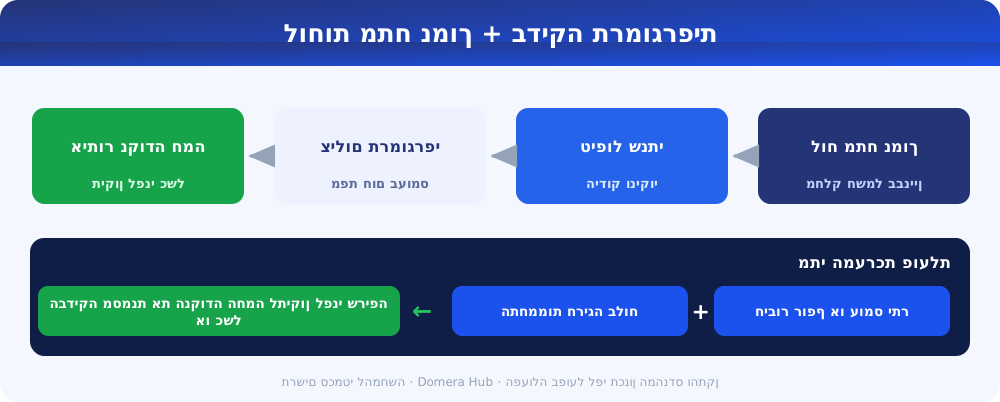
The preventive maintenance matrix defines two complementary actions for low-voltage switchboards, both at an annual (once a year) frequency applying to every site:
- Servicing and maintenance of low-voltage switchboards — a proactive action on the switchboard itself: tightening connections, cleaning off dust and dirt, checking the condition of terminals and breakers, detecting corrosion and wear, and repairing deficiencies. This is the "mechanical" inspection that restores the switchboard to sound condition.
- Thermographic scan — a heat image of the switchboard under load to locate hot spots. This is the "predictive" inspection that finds problems the eye cannot see, even after servicing. It is recommended to perform it while the switchboard is carrying a real load, otherwise hot spots may not be revealed.
The idea is a combination: the servicing tightens and cleans, and the thermographic image verifies that no hot spots remain. The exact frequencies for all the building's systems can be seen in the matrix in the PPM guide. Note that the annual switchboard servicing is defined as a legal requirement, while the thermographic scan is defined as recommended — but in practice it is the most important preventive tool, and many perform it as an inseparable part of the annual servicing.
Who is qualified to maintain and certify
The servicing and maintenance of the low-voltage switchboards are performed by an electrician holding an appropriate license. Do not settle for a general maintenance team: working inside a live switchboard requires a licensed electrician holding a license matching the size of the installation, and it is this person who signs the servicing performance certificate.
The thermographic scan may be performed by an electrician holding at least a licensed-electrician license or a limited electrician license, or alternatively by a certified thermography surveyor — in the presence and under the supervision of an electrician. The requirement for an electrician stems from the fact that the imaging is done while the switchboard is open and under voltage, an environment in which only a licensed electrician may work. All in accordance with the current standard and the guidance of the authority and manufacturer.
Standards and regulation
The annual servicing of the low-voltage switchboards is defined as a legal (statutory) requirement applying to every site, and is documented in a switchboard servicing performance certificate. The thermographic scan is defined as recommended and not as a legal obligation, but it is required as a professional completion certificate and forms part of the overall maintenance of the electrical installation. The design of the switchboards and the manner of servicing and inspection are done per the current standard and the guidance of the authority and manufacturer; do not rely on a standard number that does not explicitly appear in the installation documentation and the inspection requirements.
Required documentation and forms
Two documents are kept in the building file in every annual cycle:
- Switchboard servicing performance certificate — which includes a breakdown of the maintenance actions performed and a list of the switchboards serviced, signed by the electrician holding the appropriate license.
- Thermographic scan report + calibration certificate for the inspection instrument — the report presents the heat maps, marks the hot spots found and recommends repair, and the calibration certificate proves that the thermal camera measured correctly.
For dedicated fire-suppression systems inside the switchboard (gas or aerosol suppression) there is separate documentation — soundness certificate for a suppression system in electrical panels (Form 5) — but that is a form for the suppression system, not for the electrical servicing of the switchboard itself. Switchboard servicing and the thermographic scan have no dedicated fire-service form, and the documentation is only the performance certificates and the professional reports.
Common faults and warning signs
From the field, these are the signs the maintenance team should watch for between inspections:
- A burning smell or a smell of hot plastic near the switchboard — a clear sign of a connection heating up or insulation burning. An electrician must be called immediately.
- Discoloration or blackening on a terminal, cable or the switchboard door — evidence of local heat that has accumulated over time.
- An automatic breaker or RCD tripping repeatedly — indicates overload, a short circuit or a fault in a connection.
- A humming or crackling noise from inside the switchboard — an electrical arc or a loose contact.
- A switchboard hot to the touch on the cabinet door — abnormal internal heat requiring an immediate thermographic scan.
- Dust, moisture or water ingress in the switchboard — accelerate corrosion and increase the risk of a short circuit.
- Load that has grown without inspection — adding new consumers (charging stations, air conditioning, servers) without verifying that the switchboard and cross-section are suited to the new load.
The value of professional maintenance management / how Domera helps
Switchboard servicing and a thermographic scan are exactly the kind of inspections that are easy to postpone — the switchboard "works," there is no visible fault, and the problem is hidden inside a closed cabinet until the moment it breaks out. This is where orderly maintenance management comes in. Domera manages a preventive maintenance program for every system with one open instance at any given moment, closes every inspection only against the certifying document (the switchboard servicing certificate and the thermographic scan report), sends a reminder before the annual certificate expires, and consolidates a compliance report that shows at a glance which switchboards were serviced, which hot spots were located and which repairs are needed — so that the building's electrical backbone stays safe and sound over time.
Frequently asked questions
What is a thermographic scan and why is it important?
It is an inspection in which a thermal camera images the switchboard under load and produces a heat map. A loose connection or a loaded component heats up even before it burns, and the scan locates it at the stage where the repair is simple and cheap — before it becomes a failure or a fire.
How often is switchboard servicing performed and a thermographic scan carried out?
Both actions are performed at an annual frequency (once a year) at every site, per the maintenance matrix. Switchboard servicing is a legal requirement; the thermographic scan is recommended and is a central preventive tool.
Who is qualified to service the switchboards and perform the scan?
Switchboard servicing is performed by an electrician holding an appropriate license. The thermographic scan is performed by an electrician holding at least a licensed-electrician or limited electrician license, or by a certified thermography surveyor in the presence and under the supervision of an electrician.
What is the difference between switchboard servicing and the thermographic scan?
Servicing is a mechanical action — tightening connections, cleaning, checking components and repairing deficiencies. The thermographic scan is a heat image that verifies no hot spots the eye cannot see remain. The two complement each other and are performed together.
Why is a calibration certificate needed for the inspection instrument?
The calibration certificate proves that the thermal camera measures temperature accurately. Without a valid calibration, the heat measurements are unreliable and the hot-spot map cannot be trusted.
What is the difference between a low-voltage and a high-voltage switchboard?
Low voltage (230/400 volts) is the ordinary distribution voltage in the building; high voltage arrives from the electric utility and is stepped down by a transformer in a transformation room. Working with high voltage requires an electrician holding a separate limited license — a matter distinct from servicing the low-voltage switchboards.
Which documents are kept in the building file?
A switchboard servicing performance certificate (with a breakdown of the actions and a list of switchboards) and a thermographic scan report accompanied by a calibration certificate for the inspection instrument. These are the documents that prove compliance and soundness before inspection and insurance.
Does switchboard servicing have a fire-service form?
No. The servicing of the low-voltage switchboards and the thermographic scan have no dedicated fire-service form — the documentation is the performance certificates and the professional reports. The fire service's Form 5 refers to a dedicated fire-suppression system inside the switchboard, not to the electrical servicing of the switchboard itself.
Further reading
- Building electrical systems maintenance — the broad picture of electrical maintenance into which switchboard servicing and the thermographic scan fit.
- Electrical maintenance and emergency generator — the alternative supply system that connects to the low-voltage switchboards during a power outage.
- Soundness certificate for a suppression system in electrical panels (Form 5) — an explanation of the dedicated suppression system installed inside switchboards and in electrical rooms.
- The complete PPM guide — the preventive maintenance process and the frequency matrix for all the building's systems.
- Domera's Knowledge Hub — all the guides and articles on building management and maintenance.
Frequently asked questions
What is a thermographic scan and why is it important?
It is an inspection in which a thermal camera images the switchboard under load and produces a heat map. A loose connection or a loaded component heats up even before it burns, and the scan locates it at the stage where the repair is simple and cheap — before it becomes a failure or a fire.
How often is switchboard servicing performed and a thermographic scan carried out?
Both actions are performed at an annual frequency (once a year) at every site, per the maintenance matrix. Switchboard servicing is a legal requirement; the thermographic scan is recommended and is a central preventive tool.
Who is qualified to service the switchboards and perform the scan?
Switchboard servicing is performed by an electrician holding an appropriate license. The thermographic scan is performed by an electrician holding at least a licensed-electrician or limited electrician license, or by a certified thermography surveyor in the presence and under the supervision of an electrician.
What is the difference between switchboard servicing and the thermographic scan?
Servicing is a mechanical action — tightening connections, cleaning, checking components and repairing deficiencies. The thermographic scan is a heat image that verifies no hot spots the eye cannot see remain. The two complement each other and are performed together.
Why is a calibration certificate needed for the inspection instrument?
The calibration certificate proves that the thermal camera measures temperature accurately. Without a valid calibration, the heat measurements are unreliable and the hot-spot map cannot be trusted.
What is the difference between a low-voltage and a high-voltage switchboard?
Low voltage (230/400 volts) is the ordinary distribution voltage in the building; high voltage arrives from the electric utility and is stepped down by a transformer in a transformation room. Working with high voltage requires an electrician holding a separate limited license — a matter distinct from servicing the low-voltage switchboards.
Which documents are kept in the building file?
A switchboard servicing performance certificate (with a breakdown of the actions and a list of switchboards) and a thermographic scan report accompanied by a calibration certificate for the inspection instrument. These are the documents that prove compliance and soundness before inspection and insurance.
Does switchboard servicing have a fire-service form?
No. The servicing of the low-voltage switchboards and the thermographic scan have no dedicated fire-service form — the documentation is the performance certificates and the professional reports. The fire service's Form 5 refers to a dedicated fire-suppression system inside the switchboard, not to the electrical servicing of the switchboard itself.