In this article
- How the System Works
- Why the System Is Needed + Risks of Neglect
- The Maintenance Regime — What, How Often, and How
- Who Is Licensed to Maintain and Certify
- Standards and Regulation
- Documentation and Forms
- Common Faults and Warning Signs
- The Value of Professional Maintenance Management / How Domera Helps
- Frequently Asked Questions
- Further Reading
- Frequently asked questions
Lifting Accessories (Slings, Shackles, Ropes) — Inspection, Wear and the Inspection Report
Lifting accessories are the components that connect the lifting machine (crane, winch, lifting cradle) to the load itself — fiber slings, shackles, steel-wire ropes, lifting hooks and anchoring means. They are the link that actually carries all the weight in every lift, and therefore their failure translates immediately into a dropped load — a direct threat to life for workers and their surroundings. In Israel there is a legal obligation to inspect lifting accessories once every six months by a dedicated licensed inspector, and this article explains how they work, why they wear, what the inspection regime is, and who is licensed to certify them.
For a building manager or maintenance supervisor, lifting accessories are a classic example of a "small and hidden" risk: a relatively cheap item, easy to overlook, but the wear in it is usually invisible to an untrained eye until the moment it tears. It is precisely for this reason that the law does not settle for a self-inspection but requires a licensed inspector.
Part of a bigger picture: lifting accessories are one component within a complete preventive-maintenance program. For the full framework — all the systems, frequencies, licensed parties and inspection reports — see the complete PPM guide.
How the System Works
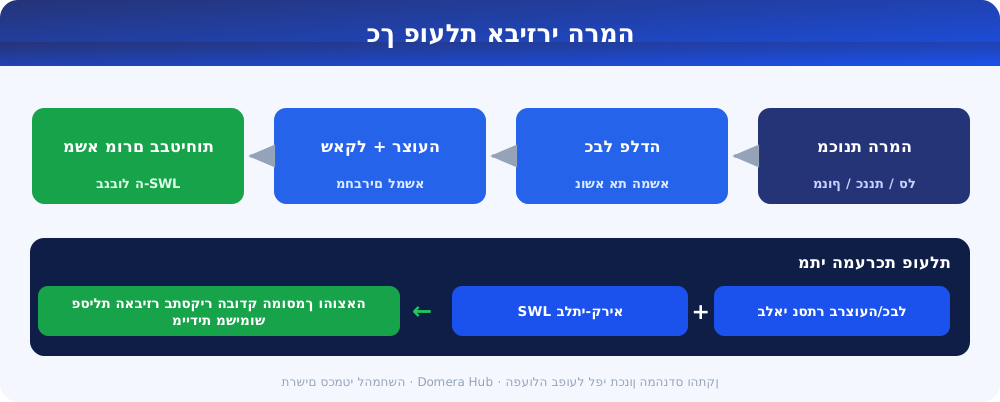
Lifting accessories are not a "system" in the electrical sense, but a load-bearing chain in which every link is critical. In every lift, the force passes from the lifting machine (the crane, the winch or the roof davit crane and lifting cradle) through a series of means to the load — and each of them must withstand the load. The main components:
- Steel-wire ropes (Wire Rope) — the rope that carries the load from the winch. Built from twisted steel strands; wears from kinks, corrosion, broken wires and abrasion on sheaves.
- Fiber slings (Slings / Round Slings) — soft polyester or nylon slings that wrap around the load. Lightweight and gentle to the lifted surface, but especially sensitive to cuts, abrasion on sharp edges, heat and UV radiation.
- Shackles — U-shaped steel rings with a threaded pin, that connect a sling/rope to a hook or an anchoring point. The shackle's strength depends on a sound pin and a body that is not deformed.
- Lifting hooks and connecting means — the hooks that grip the load, usually with a safety latch that prevents the sling from slipping off the hook.
The central concept is the Safe Working Load (SWL): each accessory has a maximum permitted load, marked on it or on a permanent tag/marking. A lift is safe only when every link in the chain is rated above the load's weight and the actual rigging angle — because a sharp rigging angle increases the force on each sling. A single weak or worn link determines the strength of the whole arrangement: a perfectly sound lifting machine will not help if the shackle beneath it is cracked.
Why the System Is Needed + Risks of Neglect
Lifting accessories are needed in every maintenance operation that involves lifting a heavy load: lowering equipment from a roof, replacing an air-conditioner motor or a pump, clearing construction debris, lifting materials to scaffolding, and work with a roof davit crane and lifting cradle. They are the most basic working means of any maintenance crew that moves something heavy.
The risk of neglect is direct and severe: a dropped load. A torn sling, a rope with broken wires, or a deformed shackle can fail at the exact moment of the lift — when someone is beneath or beside them. The consequences: a fatal injury to a worker, damage to property below, and damage to the load itself. Beyond the safety risk:
- Legal and criminal liability — a lift with an uninspected accessory is a breach of the holder's obligations under occupational-safety law; in the event of an accident the employer's/holder's exposure is heavy.
- Voiding of insurance coverage — an incident caused by equipment that did not pass an inspection-report inspection may void coverage.
- Invisible wear — the unique danger: a sling may look intact from the outside and be damaged at its core (an internal cut, UV damage, chemical damage); a rope may hide broken wires beneath grease. This is why self-inspection alone is not sufficient.
The Maintenance Regime — What, How Often, and How
Per the binding maintenance matrix, lifting accessories — slings, shackles and ropes — require a semi-annual inspection (once every 6 months) by a lifting-accessories licensed inspector, resulting in an inspection report. This is a legal requirement applying at any site where lifting operations take place, and not merely a recommendation.
The licensed inspector's inspection is professional and thorough, and generally includes: measuring wear and deformation, examining cuts and abrasion in slings, counting broken wires and corrosion in ropes, checking the pins and body of shackles, verifying a legible SWL marking, and issuing a verdict — fit / rejected / to be withdrawn from use. A rejected accessory is withdrawn from use immediately.
Alongside the legal inspection, the maintenance crew must perform a visual inspection before every use — a basic work practice (per the current manufacturer and standard guidance) in which the worker examines the accessory before the lift and withdraws from use any suspect item. Important: the worker's visual inspection does not replace the semi-annual licensed-inspector report — it is an additional layer of protection between the periodic inspections.
Who Is Licensed to Maintain and Certify
The legal inspection and the inspection report can be issued only by a lifting-accessories licensed inspector — a holder of a qualification dedicated to the field of lifting accessories. It is important to be precise: this is a distinct field of qualification. Lifting machines and work platforms, for example, are inspected by a lifting-machines licensed inspector — who is not necessarily also qualified for lifting accessories. Do not assume that the crane inspection automatically covers the slings and shackles too; make sure there is a separate inspection report for the accessories.
Between the periodic inspections, responsibility for the pre-use visual inspection and for maintaining proper storage conditions rests with the maintenance crew itself — but the formal fitness verdict, the one that holds the legal compliance, belongs to the licensed inspector alone.
Standards and Regulation
Inspection of lifting accessories is a legal (statutory) requirement. The regulatory basis for lifting-equipment inspections in Israel is the Safety at Work Ordinance and its regulations, under which a periodic inspection by a licensed inspector and the issuance of an inspection report are required. Lifting accessories belong to the "lifting equipment and pressure vessels" family, all of which is subject to the licensed-inspector inspection regime.
As for numerical Israeli-standard (SI) requirements for a single accessory — the inspection, the SWL marking, the rejection criteria and the inspection intervals are determined per the current standard and manufacturer/authority guidance, and per the judgment of the licensed inspector. In our requirements matrix there is no fire-service form or dedicated SI number for lifting accessories, so we do not cite a specific standard number here — the licensed inspector's report is the binding document.
Documentation and Forms
The document that holds the lifting accessories' compliance is an inspection report from the lifting-accessories licensed inspector, issued once every six months. Keep it as a living file with a clear expiry date — the report is the proof, before a regulator or an investigator after an incident, that the accessories were inspected and approved for use.
It is recommended to additionally maintain an accessories register (an identification number for each shackle/sling/rope, SWL, purchase date and last inspection date) and to document the pre-use visual inspections. Lifting accessories have no dedicated fire-service form — the inspection report is all the documentation required for legal compliance.
Common Faults and Warning Signs
- Slings — cuts or tears in the fibers, abrasion and frayed edges, heat/melting stains, strong fading from UV, chemical damage, or open stitching. All of these = immediate rejection.
- Steel-wire ropes — broken wires (above the number permitted over a given length), corrosion, "birdcaging" or kinking, flattening, and a protruding core. A rope with visible broken wires is withdrawn from use.
- Shackles — deformation or opening of the body, a pin that does not thread all the way or a replacement pin that is not original, wear above the permitted amount, and an illegible SWL marking.
- Hooks — opening of the hook's "throat" (indicating overload), a broken or missing safety latch, and cracks.
- A missing or illegible SWL marking — an accessory whose safe working load cannot be verified is considered unfit for use.
- Poor storage — accessories on the floor, exposed to sun/rain/chemicals, or tangled together — accelerate invisible wear.
The Value of Professional Maintenance Management / How Domera Helps
Lifting accessories are an example of a maintenance task that is easy to "forget": a cheap item, an inspection every six months, with no electrical system that raises an alert when something is wrong. It is precisely items like these that fall through the cracks — until an incident happens. Domera's Knowledge Hub is designed to help the maintenance manager see all these small-and-critical items in one place.
In practice, in Domera the inspection of lifting accessories is managed through a preventive-maintenance program (PPM): for the semi-annual inspection a single open instance is opened at any given moment, and closing it requires attaching the licensed inspector's report. The system sends a reminder before the report expires, and produces compliance reports that show exactly which accessories are valid and which are overdue. The idea is simple: don't rely on memory for a small item, but on a system that closes the loop against the certifying document.
Frequently Asked Questions
How often must lifting accessories be inspected?
Once every six months (every 6 months) by a lifting-accessories licensed inspector, who issues an inspection report. This is a legal requirement applying at any site where lifting operations take place, and not merely a recommendation.
Who is licensed to inspect and certify lifting accessories?
Only a lifting-accessories licensed inspector — a holder of a qualification dedicated to this field. It is important to know: a lifting-machines licensed inspector (who inspects cranes and platforms) is not necessarily also qualified for lifting accessories, so a separate inspection report is required for the accessories.
What is the difference between the semi-annual inspection and the inspection the worker performs before use?
The semi-annual inspection is a thorough legal inspection by a licensed inspector that concludes with an inspection report. The visual inspection before every use is a worker's work practice that catches visible defects — it is important and complementary, but does not replace the licensed inspector's report.
Why is a licensed-inspector inspection needed at all if the sling looks intact?
Because wear in lifting accessories is usually invisible: a sling may look intact from the outside and be damaged at its core (an internal cut, UV or chemical damage), and a rope may hide broken wires beneath grease. A licensed inspector knows how to identify hidden wear that a self-inspection misses.
What is SWL and why is it important?
SWL (Safe Working Load) is the maximum weight permitted to be lifted with the accessory, marked on it. A lift is safe only when every link in the chain (rope, shackle, sling, hook) is rated above the load's weight and the actual rigging angle — an accessory without a legible SWL is unfit for use.
When is a lifting accessory withdrawn from use?
Immediately upon discovering a cut/tear in a sling, broken wires or corrosion in a rope, deformation or a defective pin in a shackle, an opened throat in a hook, or an illegible SWL marking — and in any case where the licensed inspector rejected the accessory in the report.
Which documents must be kept for lifting accessories?
The licensed inspector's inspection report (issued every six months) — it is the binding document for legal compliance. It is recommended to additionally maintain an accessories register with an identification number, SWL and last inspection date for each item.
Is there a fire-service form or dedicated SI standard for lifting accessories?
Not in our requirements matrix — there is no fire-service form or dedicated SI number referenced for lifting accessories. The binding document is the licensed inspector's report; the inspection criteria are determined per the current standard and manufacturer/authority guidance.
Further Reading
- The PPM guide — how to build a complete preventive-maintenance program for a building, including lifting accessories.
- Lifting machines and work platforms — the cranes and platforms to which lifting accessories are connected, and their licensed-inspector report regime.
- Roof davit crane and lifting cradle (BMU) — the lifting system for facade cleaning that makes routine use of lifting accessories and anchoring.
- The building holder's safety obligations — the legal framework for occupational safety, including lifting-equipment inspections.
- The Knowledge Hub — all the guides on building systems in one place.
Frequently asked questions
How often must lifting accessories be inspected?
Once every six months (every 6 months) by a lifting-accessories licensed inspector, who issues an inspection report. This is a legal requirement applying at any site where lifting operations take place, and not merely a recommendation.
Who is licensed to inspect and certify lifting accessories?
Only a lifting-accessories licensed inspector — a holder of a qualification dedicated to this field. It is important to know: a lifting-machines licensed inspector (who inspects cranes and platforms) is not necessarily also qualified for lifting accessories, so a separate inspection report is required for the accessories.
What is the difference between the semi-annual inspection and the inspection the worker performs before use?
The semi-annual inspection is a thorough legal inspection by a licensed inspector that concludes with an inspection report. The visual inspection before every use is a worker's work practice that catches visible defects — it is important and complementary, but does not replace the licensed inspector's report.
Why is a licensed-inspector inspection needed at all if the sling looks intact?
Because wear in lifting accessories is usually invisible: a sling may look intact from the outside and be damaged at its core (an internal cut, UV or chemical damage), and a rope may hide broken wires beneath grease. A licensed inspector knows how to identify hidden wear that a self-inspection misses.
What is SWL and why is it important?
SWL (Safe Working Load) is the maximum weight permitted to be lifted with the accessory, marked on it. A lift is safe only when every link in the chain (rope, shackle, sling, hook) is rated above the load's weight and the actual rigging angle — an accessory without a legible SWL is unfit for use.
When is a lifting accessory withdrawn from use?
Immediately upon discovering a cut/tear in a sling, broken wires or corrosion in a rope, deformation or a defective pin in a shackle, an opened throat in a hook, or an illegible SWL marking — and in any case where the licensed inspector rejected the accessory in the report.
Which documents must be kept for lifting accessories?
The licensed inspector's inspection report (issued every six months) — it is the binding document for legal compliance. It is recommended to additionally maintain an accessories register with an identification number, SWL and last inspection date for each item.
Is there a fire-service form or dedicated SI standard for lifting accessories?
Not in our requirements matrix — there is no fire-service form or dedicated SI number referenced for lifting accessories. The binding document is the licensed inspector's report; the inspection criteria are determined per the current standard and manufacturer/authority guidance.