In this article
- How the System Works
- Why the System Is Needed + Risks of Neglect
- The Maintenance Regime — What, How Often, and How
- Who Is Authorized to Maintain and Certify
- Standards and Regulation
- Required Documentation and Forms
- Common Faults and Warning Signs
- The Value of Professional Maintenance Management / How Domera Helps
- Frequently Asked Questions
- Further Reading
- Frequently asked questions
Defibrillator (AED) — Maintenance, Annual Functional Test and Emergency Readiness
A defibrillator (AED — Automated External Defibrillator) is an accessible resuscitation device, installed in a visible location in the building, that delivers a controlled electric shock able to restore the heart to a normal rhythm when a person collapses in sudden cardiac arrest. In the first minutes after the collapse it is usually the difference between life and death — and so what matters is not merely that it exists, but that it will work at that precise moment. In Israel, an AED requires an annual functional test by a manufacturer-authorized company, which produces a defibrillator functional certificate — a legal requirement, not a recommendation. This article explains how the device works, why its maintenance is critical, what the testing regime is, and who is authorized to certify it.
For a building manager or safety officer, the AED is the quiet "policy" that no one touches — until the second a person collapses in the lobby. A depleted battery, expired pads, or a device moved from its place are invisible to the eye, but in an emergency they are the difference between a life-saving device and a dead box on the wall. This is exactly why the periodic test and readiness are not a formality: they are what ensures the device will operate when needed.
Part of a bigger picture: the defibrillator is one component within a complete preventive maintenance program for the building — all systems, frequencies, authorized parties, and documentation in one place. For the full framework, see the complete PPM guide.
How the System Works
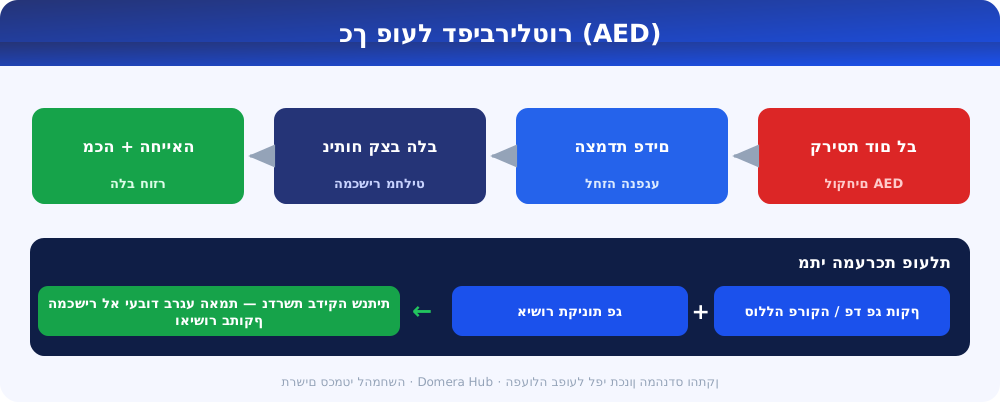
An automated external defibrillator does not "shock people with electricity" — it is a smart medical device that analyzes the heart and decides on its own. Its main components:
- The control unit and battery — the heart of the device, supplying the energy for the shock and running the analysis. The battery is a consumable with a defined service life, and its decline is the most common failure.
- Electrodes (pads) — adhesive surfaces stuck to the casualty's chest, through which the device both reads the heart rhythm and delivers the shock. Pads have an expiry date — the conductive gel dries out over time — and so they are a consumable that is replaced periodically.
- The voice-prompt system — the AED guides the operator by voice and image, step by step: where to attach the pads, when to stand clear, and when to press. It is designed to be used even by someone who is not a medical professional.
The action flow in an emergency: a person collapses in sudden cardiac arrest, the device is taken from its station and switched on, and the pads are stuck to the chest. The device analyzes the heart rhythm itself — and here is the critical logic: it delivers a shock only if it detects a treatable rhythm (ventricular fibrillation / ventricular tachycardia), and not if the heart has stopped entirely or is beating normally. If a suitable rhythm is detected, the device charges itself and instructs the operator to stand clear and press (or does so automatically in certain models). Between analyses it prompts continuation of chest compressions. This entire chain — the detection, the charging, the shock — depends on a functioning device, a charged battery, and in-date pads; if one of these fails, the device will not perform its function at the moment of truth.
Why the System Is Needed + Risks of Neglect
Sudden cardiac arrest is a condition in which the heart stops beating effectively without warning, and the casualty loses consciousness within seconds. The decisive factor is time: survival odds drop sharply with every passing minute without defibrillation, and an ambulance usually takes far too many minutes to arrive. An accessible defibrillator in the building is meant to bridge precisely this critical gap — to deliver a shock in the first minutes, before the medical team arrives. It is usually the only thing in the building that can bring a person back to life in this situation.
Neglecting the device is especially dangerous because the failure is hidden: the AED hangs on the wall and looks ready, but a depleted battery or expired pads are not apparent without testing — and are discovered at the worst possible moment, when someone collapses, the button is pressed, and nothing happens. Beyond the direct risk to life:
- Failed emergency readiness — a non-functioning device turns the building's entire emergency preparedness into an illusion; whoever relied on it will lose precious minutes precisely when there are no minutes to spare. The AED is a central component of the building's emergency procedures.
- Legal liability — where there is an obligation to install and maintain an AED, keeping a non-functioning device or one whose components have expired is a breach of the safety obligations of the building's occupier, and may expose the occupier to liability following an incident.
- Loss of trust and availability — a device that has been moved from its place, locked in a cabinet, or whose location is unknown to the staff — is equivalent to a device that does not exist. Accessibility and a known location are an inseparable part of its readiness.
The Maintenance Regime — What, How Often, and How
Per the mandatory maintenance matrix, the defibrillator requires an annual functional test (once every 12 months) by the authorized party, which produces a defibrillator functional certificate. This is a legal requirement applying to any site where the device is installed.
The annual test is a professional inspection, and generally (per the current manufacturer guidance and standard) it includes: checking the integrity of the device itself and running its self-test, examining the battery condition and remaining service life, checking the validity of the pads and replacing them if needed, and verifying that the device passes the manufacturer's fitness tests. At the end, a functional certificate is issued documenting that the device is ready for use.
Alongside the professional annual test, an ongoing visual check is strongly recommended: most AEDs run an automatic self-test and display a status indicator (light/symbol) showing the device is functional. The safety officer should verify periodically that the indicator is green, that the device is in place and accessible, and that the expiry dates of the pads and battery have not passed. This visual check does not replace the annual test — it is a protective layer intended to catch a fault (a weakened battery, an expired pad) between the professional tests. Frequencies and metrics that do not appear in the matrix are set per the manufacturer's guidance; do not assume any figure that is not documented.
Who Is Authorized to Maintain and Certify
The annual test and the functional certificate are issued by a company authorized by the device manufacturer — the only party authorized to determine that the AED is functional and ready for use. The reason the manufacturer is central: every AED model differs in its batteries, pads, self-test protocol, and spare parts, and only a manufacturer-authorized party knows the exact specifications and uses original, approved components.
An important distinction: the ongoing visual check (verifying a green indicator, location, and component validity) is the responsibility of the building's safety officer, but the official verdict of fitness — the defibrillator functional certificate — belongs solely to the manufacturer-authorized company. Do not assume that replacing a pad or a self-test replaces the professional annual certificate. In parallel, it is worthwhile for the building team to undergo CPR and AED-use training, because a functioning device without a person who knows how to operate it does not save lives.
Standards and Regulation
The functional test of the defibrillator is a legal (statutory) requirement applying to any site where the device is installed. The keeping, placement, and maintenance of resuscitation devices in public places in Israel are governed by legislation and by Ministry of Health guidelines, which require a functioning, accessible, and tested device.
As for a specific SI standard number — our requirements matrix contains no Israeli Standard number or dedicated fire form for this system, and so we do not cite an SI number here; the testing protocol, spare parts, and fitness criteria are set per the current manufacturer guidance and standard/authority and by the manufacturer-authorized party. The annual functional certificate is the binding document.
Required Documentation and Forms
The document that holds the device's compliance is the defibrillator functional certificate — issued once a year by the manufacturer-authorized company. Keep it as a live file with a clear expiry date: this is the documentation that shows, before a regulator or an investigator after an incident, that the device was tested, that its components are in date, and that it was ready for use.
In addition, it is recommended to keep the expiry dates of the pads and battery (in order to schedule replacement before they lapse), the log of visual checks, and the staff CPR and AED-use training certificates. A defibrillator has no dedicated fire form — the functional certificate from the authorized company is the core of the documentation required for legal compliance.
Common Faults and Warning Signs
- A weak or depleted battery — the most common failure. The battery is consumed over time even if the device was not in use; a red/flashing status indicator is an immediate warning sign.
- Expired or dried-out pads — the conductive gel dries out, and the pad will not adhere or will not deliver the shock properly. Check the expiry date and the location of a spare pair of pads.
- A self-test indicator that is not normal — a light or symbol showing the device failed its automatic self-test. Do not ignore it — the device is reporting that it is not ready.
- A device moved from its place or locked away — an AED not in its permanent location, locked in a cabinet, blocked, or with its signage removed. In an emergency no one will find it in time.
- No valid functional certificate — no annual certificate from the authorized company, or the certificate has expired. This is the most serious documentation failure.
- An untrained team — a functioning device but no one in the building knows where it is or how to operate it. Technical fitness without human readiness is not enough.
The Value of Professional Maintenance Management / How Domera Helps
The defibrillator illustrates why scheduling maintenance is not a bureaucratic matter but a matter of human life: an expired functional certificate, a depleted battery, or an expired pad mean that at the moment someone collapses — the device simply will not work. Domera's Knowledge Hub is designed to help the safety officer see exactly when every certificate and expiry lapses, before they become a problem.
In practice, at Domera the defibrillator test is managed through a preventive maintenance program (PPM): for the annual test, one open instance exists at any given moment, and closing it requires attaching the functional certificate from the authorized company. The system sends a reminder before the certificate expires (as well as before the pads and battery expire, if documented), and produces compliance reports showing exactly which emergency measures are valid and which are out of date. The idea is simple: to close the loop against the certifying document, so that the device is functioning and ready at precisely the moment it is needed.
Frequently Asked Questions
What is a defibrillator (AED) and why is it important in a building?
An automated external defibrillator is an accessible resuscitation device that delivers a controlled electric shock able to restore the heart to a normal rhythm during sudden cardiac arrest. It is important because survival odds drop with every minute, and the AED bridges the time until the ambulance arrives — usually the only thing in the building that can save a person in this situation.
How often must a defibrillator be tested?
Once a year (every 12 months) by a manufacturer-authorized company, which issues a defibrillator functional certificate. This is a legal requirement. In addition, it is recommended to verify periodically that the self-test indicator is normal and that the pad and battery dates have not passed.
Who is authorized to test and certify the defibrillator?
Only a company authorized by the device manufacturer — it knows the model's specifications, uses original components, and issues the functional certificate. An ongoing visual check can be done by the safety officer, but it does not replace the professional annual certificate.
What is consumable in a defibrillator and needs replacing?
Two main components: the battery, which is depleted over time even without use, and the pads (electrodes), whose conductive gel dries out and so they have an expiry date. Both are replaced per the manufacturer's guidance, and it is advisable to keep a spare pair of pads.
Why does the AED's installed location matter?
A functioning device that no one knows the location of, that has been moved, or locked in a cabinet — is equivalent to a device that does not exist. Quick accessibility, a known location, and clear signage are an inseparable part of the device's emergency readiness.
Can the device shock a healthy person by mistake?
No. The AED analyzes the heart rhythm itself and delivers a shock only if it detects a treatable rhythm (such as ventricular fibrillation). If the heart has stopped entirely or is beating normally — the device will not deliver a shock but will instruct continuation of chest compressions. This is why it is safe to use even by someone who is not a medical professional.
Is there a dedicated fire form or SI standard for a defibrillator?
Not in our requirements matrix — there is no fire form and no dedicated SI standard number directed at a defibrillator. The binding document is the defibrillator functional certificate from the manufacturer-authorized company; the testing protocol and spare parts are set per the current manufacturer guidance and standard/authority, and the matter is governed by Ministry of Health guidelines.
Is it enough for the device to be functional, or is a trained team also needed?
Both are necessary. A functioning device without a person who knows where it is and how to operate it will not save lives. Alongside the annual test, it is recommended that the building team undergo CPR and AED-use training, and that the AED be integrated into the building's emergency procedures.
Further Reading
- The complete PPM guide — how to build a complete preventive maintenance program for the building, including emergency measures and periodic functional tests.
- Emergency procedures in an office building — how to integrate the defibrillator, CPR, and evacuation within a complete emergency preparedness framework.
- The safety obligations of the building's occupier — the legal framework for keeping functioning emergency and safety measures in the building.
- The Knowledge Hub — all the guides on building systems in one place.
Frequently asked questions
What is a defibrillator (AED) and why is it important in a building?
An automated external defibrillator is an accessible resuscitation device that delivers a controlled electric shock able to restore the heart to a normal rhythm during sudden cardiac arrest. It is important because survival odds drop with every minute, and the AED bridges the time until the ambulance arrives — usually the only thing in the building that can save a person in this situation.
How often must a defibrillator be tested?
Once a year (every 12 months) by a manufacturer-authorized company, which issues a defibrillator functional certificate. This is a legal requirement. In addition, it is recommended to verify periodically that the self-test indicator is normal and that the pad and battery dates have not passed.
Who is authorized to test and certify the defibrillator?
Only a company authorized by the device manufacturer — it knows the model's specifications, uses original components, and issues the functional certificate. An ongoing visual check can be done by the safety officer, but it does not replace the professional annual certificate.
What is consumable in a defibrillator and needs replacing?
Two main components: the battery, which is depleted over time even without use, and the pads (electrodes), whose conductive gel dries out and so they have an expiry date. Both are replaced per the manufacturer's guidance, and it is advisable to keep a spare pair of pads.
Why does the AED's installed location matter?
A functioning device that no one knows the location of, that has been moved, or locked in a cabinet — is equivalent to a device that does not exist. Quick accessibility, a known location, and clear signage are an inseparable part of the device's emergency readiness.
Can the device shock a healthy person by mistake?
No. The AED analyzes the heart rhythm itself and delivers a shock only if it detects a treatable rhythm (such as ventricular fibrillation). If the heart has stopped entirely or is beating normally — the device will not deliver a shock but will instruct continuation of chest compressions. This is why it is safe to use even by someone who is not a medical professional.
Is there a dedicated fire form or SI standard for a defibrillator?
Not in our requirements matrix — there is no fire form and no dedicated SI standard number directed at a defibrillator. The binding document is the defibrillator functional certificate from the manufacturer-authorized company; the testing protocol and spare parts are set per the current manufacturer guidance and standard/authority, and the matter is governed by Ministry of Health guidelines.
Is it enough for the device to be functional, or is a trained team also needed?
Both are necessary. A functioning device without a person who knows where it is and how to operate it will not save lives. Alongside the annual test, it is recommended that the building team undergo CPR and AED-use training, and that the AED be integrated into the building's emergency procedures.