In this article
- How the System Works
- Why the System Is Needed + Risks of Neglect
- The Maintenance Regime — What, How Often, and How
- Who Is Licensed to Maintain and Certify
- Standards and Regulation
- Required Documentation and Forms
- Common Faults and Warning Signs
- The Value of Professional Maintenance Management / How Domera Helps
- Frequently Asked Questions
- Further Reading
- Frequently asked questions
High-Voltage (HV) Installation — The Building's Transformer & High-Voltage Room
A high-voltage (HV) installation is the link at which the building receives its electrical supply at high voltage from the Israel Electric Corporation's grid, and steps it down — via transformers — to the low voltage that can feed the distribution boards, elevators, HVAC and apartments. In large, high-rise buildings this is the heart of the electrical system: if the high-voltage room is out of service, the whole building goes dark.
For a building manager or maintenance engineer, this installation is both the most dangerous and the most regulated electrical component in the building. Access to it and its maintenance are reserved exclusively for a holder of a dedicated license, and in most tall buildings its maintenance is a legal requirement. This article explains how the installation works, why maintaining it matters, what the maintenance regime is in Israel, who is licensed to touch it, and how to manage all of it without missing a certificate.
Part of a bigger picture: the high-voltage installation is one component within a complete preventive-maintenance program. For the full framework — all the systems, frequencies, licensed parties and documents — see the complete PPM guide.
How the System Works
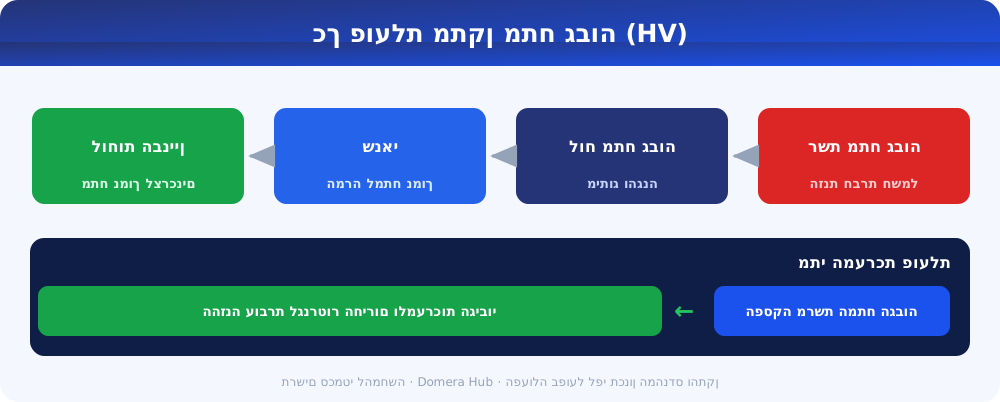
In principle, the Israel Electric Corporation supplies a large building with electricity at high voltage — a voltage level far higher than that at a wall socket. The reason is simple: the higher the voltage, the more the same amount of energy can be transmitted at a lower current and with smaller losses. But high voltage cannot be used directly in the building — it has to be "converted" to low voltage.
At the core of the installation sit a few main components:
- High-voltage switchboard (transformation room) — the point at which the supply is received from the high-voltage grid, with dedicated switching and protection equipment.
- Transformer(s) — the component that steps the high voltage down to low voltage. This is the beating heart of the installation.
- Switching, protection and isolation equipment — isolators, breakers and protections that isolate the installation during a fault or during work.
From the transformer onward, the low voltage flows to the building's distribution boards, and from there to every consumer: lighting, elevators, HVAC and apartments. In other words, the high-voltage installation sits upstream of the entire electrical system — it is what feeds everything, and therefore a failure in it affects the whole building, not a single circuit. During a grid outage, the building's supply switches to the emergency generator and the backup systems — but the installation itself remains the central distribution node.
Why the System Is Needed + Risks of Neglect
The high-voltage installation is needed quite simply because without it there is no electricity in the building: it is the bridge between the Israel Electric Corporation's grid and every internal consumer. But beyond that, this is the component that carries the highest electrical risk in the building — high voltage is immediately life-threatening, and a fault in it can cause an arc flash, a fire or electrocution.
Neglecting maintenance creates three types of risk:
- Personal safety. Loose connections, deteriorating insulation, moisture or corrosion in the transformation room can cause a short circuit, an arc flash or a high-voltage fire — with a threat to the life of anyone in the vicinity.
- Shutdown of the entire building. A failure in a transformer or the high-voltage switchboard disables not a single circuit but the entire electrical supply to the building — with heavy operational and financial damage, and sometimes a long repair time due to equipment availability.
- Law and insurance. In high-rise buildings, maintaining the installation is a legal requirement. The absence of a valid maintenance certificate can jeopardize insurance coverage in the event of damage and create legal exposure for the committee and the management company.
The Maintenance Regime — What, How Often, and How
The high-voltage installation has one clear central maintenance requirement:
- High-voltage electrical installation maintenance — annual (every 12 months). Periodic servicing and maintenance of the installation and all its components — the high-voltage switchboard, the transformers and the switching and protection equipment. The service includes, in accordance with the manufacturer's instructions and the standard, cleaning, checking connections and tightenings, examining the condition of the insulation and transformers, and testing the protection and isolation systems. The document to produce and keep: a high-voltage electrical installation maintenance certificate including a list of the boards and installations serviced.
Note an important distinction by building height: in a building of 10 storeys or more, maintaining the installation is a legal (statutory) requirement; in a building below 10 storeys it is a recommendation. In both cases the documented frequency is annual — the difference is in the legal status of the requirement, not in the pace. Even where it is only a recommendation, we strongly advise against skipping it: this is high-voltage equipment whose failure is life-threatening, and preventive maintenance is the most effective protection against it.
Who Is Licensed to Maintain and Certify
This is perhaps the most important point in the article: a high-voltage installation is not an area every electrician is permitted to touch. Maintenance and certification are reserved for an electrician holding a suitable license, an HV-restricted (high-voltage) license — a dedicated qualification separate from an ordinary electrician's license, permitting work on high-voltage installations.
The practical meaning for the building manager:
- Do not admit into the high-voltage room, or allow work in it by, anyone who is not the holder of an HV-restricted license — including a "regular" certified electrician.
- The annual maintenance certificate is signed by the HV-restricted license holder alone, and they are the one responsible for the list of boards and installations serviced.
- During other works in the building (HVAC, elevators, waterproofing), make sure no one enters the room or opens a high-voltage board without the licensed party.
By comparison, the inspection of the low-voltage electrical installation is carried out by an inspecting electrician, and emergency-generator maintenance by an electrician holding a suitable license — these are different qualifications. High voltage requires the dedicated restricted license, and this is a distinction that must not be blurred.
Standards and Regulation
Maintenance of the high-voltage installation is subject to the Electricity Law and its regulations, and the current standard and manufacturer instructions. As noted, its legal status depends on height: in a building of 10 storeys or more it is a legal requirement, and in a lower building it is a recommendation.
It is important to be precise and not invent: in our requirements matrix there is no unique Israeli-standard (SI) number or dedicated fire-service form referenced explicitly for the maintenance of the high-voltage installation — so we will not cite a specific standard number here. The binding requirement is performing the annual maintenance by an electrician holding an HV-restricted license, and producing the maintenance certificate including the list of boards and installations serviced. As for the execution details — one must act in accordance with the manufacturer's instructions and the applicable electricity regulations.
Required Documentation and Forms
The document that holds the installation's compliance is one and clear: a high-voltage electrical installation maintenance certificate including a list of the boards and installations serviced, signed by the electrician holding the restricted license. Manage it as a living file with an expiry date, and refresh it each year.
Unlike some suppression systems, the high-voltage installation has no dedicated fire-service form — so there is no link to a fire-service form here. That said, it is worth keeping the maintenance certificate together with the rest of the building's electrical file (electrical installation inspection, earthing inspection, generator certificate), because in the event of an incident or an audit all these documents are examined as a whole. From the perspective of a regulator, insurer or investigator, a valid maintenance certificate is the proof that the installation was operated and maintained as required.
Common Faults and Warning Signs
- Heat or discoloration in a transformer / in connections — a sign of a loose connection or overload; it often precedes a failure, and can be detected by inspection and thermographic imaging.
- A burning smell, soot or an abnormal "buzzing" sound from the transformation room — may indicate an insulation problem or an arc flash; requires urgent inspection by a holder of the restricted license.
- Moisture, leakage or corrosion in the high-voltage room — a damp environment is the enemy of high voltage; it increases the risk of a short circuit and of voltage tracking.
- A high-voltage room used as a storeroom — storing materials (especially flammable ones) in the room is both a safety risk and a common deficiency; the room must remain clear and accessible only to authorized personnel.
- An expired or missing maintenance certificate — in a high-rise building this is a breach of a legal requirement, and in any building it is a safety and insurance exposure.
The Value of Professional Maintenance Management / How Domera Helps
The high-voltage installation is exactly the kind of component where a single lapse — an expired certificate, an unlicensed party who entered, a deferred service — can cost the shutdown of an entire building or a threat to life. The value of professional maintenance management is that this system does not rest on anyone's memory.
In Domera, the high-voltage installation is managed through a preventive-maintenance program (PPM): for the annual inspection, a single open instance is opened at any given moment, and closing it requires attaching the maintenance certificate from the electrician holding the restricted license. The system sends a reminder before the certificate expires and produces compliance reports that show exactly whether the installation is valid or overdue. The idea is simple: close the loop against the document, not against a gut feeling — so that no high-voltage inspection "falls through the cracks."
Frequently Asked Questions
What is a high-voltage installation in a building?
It is the part of the electrical system where the building receives a high-voltage supply from the Israel Electric Corporation's grid, and steps it down via transformers to the low voltage that feeds the whole building. It is usually located in a dedicated transformation room and includes a high-voltage switchboard, transformers, and switching and protection equipment.
How often is a high-voltage installation maintained?
Maintenance of the installation is performed once a year (every 12 months). In a building of 10 storeys or more this is a legal requirement, and in a lower building it is a recommendation — the frequency is identical, the difference is in the legal status.
Who is licensed to maintain and certify a high-voltage installation?
Only an electrician holding a suitable license, an HV-restricted (high-voltage) license. This is a dedicated qualification separate from an ordinary electrician's license; a "regular" certified electrician is not permitted to maintain or touch a high-voltage installation.
What is the difference between high voltage and low voltage in a building?
High voltage is the supply level at which electricity arrives from the Israel Electric Corporation's grid to a large building; low voltage is the level actually worked with in the boards and sockets. The transformer in the high-voltage installation is what steps the high voltage down to low voltage.
Which document must be kept for the high-voltage installation?
A high-voltage electrical installation maintenance certificate including a list of the boards and installations serviced, signed by the electrician holding the restricted license. It should be kept as a living file with an expiry date and refreshed each year.
Is there a fire-service form for a high-voltage installation?
No. Unlike some suppression systems, the maintenance of the high-voltage installation has no dedicated fire-service form; the binding document is the annual maintenance certificate from the electrician holding the restricted license.
What is the danger in neglecting the high-voltage installation?
High voltage is immediately life-threatening. Neglect can cause an arc flash, a fire or electrocution, and a failure in the installation disables the entire electrical supply to the building. In addition, in a high-rise building the absence of a maintenance certificate is a breach of a legal requirement that can jeopardize insurance coverage.
Further Reading
- The PPM guide — how to build a complete preventive-maintenance program for a building.
- Building electrical systems maintenance — the overall picture of the electrical installation, the boards and the periodic inspections.
- Emergency generator — the alternative supply source when the high-voltage grid goes down.
- Uninterruptible power supply (UPS) — the continuous backup for critical systems until the generator comes up.
- The Knowledge Hub — all the guides on building systems in one place.
Frequently asked questions
What is a high-voltage installation in a building?
It is the part of the electrical system where the building receives a high-voltage supply from the Israel Electric Corporation's grid, and steps it down via transformers to the low voltage that feeds the whole building. It is usually located in a dedicated transformation room and includes a high-voltage switchboard, transformers, and switching and protection equipment.
How often is a high-voltage installation maintained?
Maintenance of the installation is performed once a year (every 12 months). In a building of 10 storeys or more this is a legal requirement, and in a lower building it is a recommendation — the frequency is identical, the difference is in the legal status.
Who is licensed to maintain and certify a high-voltage installation?
Only an electrician holding a suitable license, an HV-restricted (high-voltage) license. This is a dedicated qualification separate from an ordinary electrician's license; a "regular" certified electrician is not permitted to maintain or touch a high-voltage installation.
What is the difference between high voltage and low voltage in a building?
High voltage is the supply level at which electricity arrives from the Israel Electric Corporation's grid to a large building; low voltage is the level actually worked with in the boards and sockets. The transformer in the high-voltage installation is what steps the high voltage down to low voltage.
Which document must be kept for the high-voltage installation?
A high-voltage electrical installation maintenance certificate including a list of the boards and installations serviced, signed by the electrician holding the restricted license. It should be kept as a living file with an expiry date and refreshed each year.
Is there a fire-service form for a high-voltage installation?
No. Unlike some suppression systems, the maintenance of the high-voltage installation has no dedicated fire-service form; the binding document is the annual maintenance certificate from the electrician holding the restricted license.
What is the danger in neglecting the high-voltage installation?
High voltage is immediately life-threatening. Neglect can cause an arc flash, a fire or electrocution, and a failure in the installation disables the entire electrical supply to the building. In addition, in a high-rise building the absence of a maintenance certificate is a breach of a legal requirement that can jeopardize insurance coverage.